As U.S. utilities invest billions in grid resilience, undergrounding offers clear benefits in the right locations. But higher installation costs, complex repairs and risks to buried infrastructure make a strong case for a more balanced approach.
Across the United States, utilities face growing pressure to strengthen electricity networks against extreme weather, improve reliability and reduce wildfire risk. Undergrounding has become a prominent part of grid-modernization plans, supported in some regions by legislation, regulatory programs and public funding.
The benefits are clear: buried cables are less exposed to high winds, falling trees and ice accumulation. In high-risk locations, undergrounding can be an effective investment. However, converting existing overhead networks involves considerable engineering and construction work. Excavation, conduit installation, specialist cable laying, traffic management and reinstatement of roads and land can all add significantly to project costs.
The scale of the financial difference is highlighted by figures from the US Department of Energy. Its research indicates that new underground transmission construction can cost approximately three to ten times more than overhead alternatives, while converting existing overhead transmission lines to underground can cost around 1.5 to five times as much.
Actual project costs vary considerably according to location, network design and installation conditions. Examples reported across US utilities illustrate the range: Wisconsin Public Service Corporation has reported costs of approximately $160,000 per mile for some rural distribution undergrounding, compared with around $2.97 million per mile for PG&E's distribution undergrounding programme and approximately $7 million per mile for CenterPoint Energy's Greater Houston initiative.
For utilities responsible for extensive electricity networks, these differences represent a substantial investment challenge. The question is not simply whether undergrounding works, but whether the reliability and safety improvements justify the additional expenditure in each location.
The Common Ground Alliance's 2026 economic impact analysis modelled 668,999 underground utility damage incidents in 2025. The figures cover multiple buried utility pipes including electricity, gas, water and telecommunications.
Overhead faults are often visible and relatively accessible. Underground faults can require specialist testing to locate the problem, followed by excavation, cable jointing and reinstatement. Buried infrastructure is also vulnerable to flooding, moisture ingress, corrosion and accidental damage during third-party excavation.
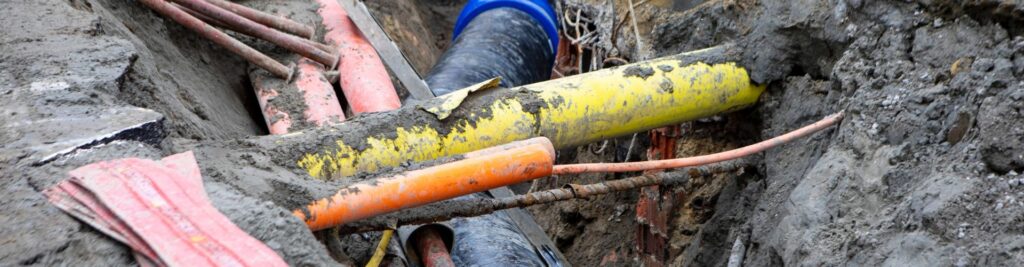
The scale of that last problem is significant. The Common Ground Alliance's 2026 economic impact analysis modelled 668,999 underground utility damage incidents in 2025, estimating their total economic impact at $83.2 billion. The figures cover multiple buried utilities, including electricity, gas, water and telecommunications.
These estimates do not prove that underground electricity cables are inherently less reliable than overhead lines. They do demonstrate that buried infrastructure carries its own maintenance, safety and economic risks, which must be included in resilience planning. Utilities should therefore assess both the reduction in weather-related faults and the practicalities of maintaining and restoring the network.
Undergrounding can be justified where specific hazards, such as wildfire exposure, make it the most effective option. Elsewhere, the principal risks may be deteriorating poles, vehicle impacts or vegetation. In these circumstances, targeted measures such as pole replacement, structural hardening, vegetation management and preventive pole protection may improve reliability without the cost of converting an entire circuit.
Policy also influences investment decisions. California's Senate Bill 884, for example, established a framework for long-term undergrounding plans by investor-owned utilities. Such initiatives address legitimate safety concerns, but they also highlight the importance of comparing undergrounding with alternative approaches. The objective should be to reduce risk and improve reliability at the best whole-life cost, not simply to maximize the number of miles of cable buried.

For utilities operating extensive wooden-pole networks, maximizing asset life is another opportunity to reduce expenditure and strengthen resilience.
Ground-line decay can progressively compromise a wooden pole's structural integrity, sometimes before the full extent of deterioration becomes apparent. Polesaver's Rot-Guard technology is designed to protect this vulnerable section, preventing the conditions that allow fungal decay to develop. By addressing a specific cause of premature deterioration, ground-line protection can help utilities avoid unnecessary pole replacements and associated labour, transport and installation costs. It can also help free up capital for other network priorities.
Polesaver's published case studies illustrate the potential. Uganda's distributor Umeme has reported annual savings of approximately $14 million following extensive deployment of Rot-Guard, while Cameroon's ENEO has reported approximately $12 million. These results reflect utility-specific conditions and should not be treated as guaranteed savings for North American networks. The wider principle is relevant across markets: preventing avoidable asset deterioration can be a valuable component of long-term infrastructure investment.
Undergrounding has an important role in modern grid planning, but it is not the answer to every reliability challenge. The most effective strategy will depend on local hazards, network design, asset condition and the costs of available alternatives. For some circuits, undergrounding will be the right choice. For others, strengthening and protecting overhead infrastructure will deliver worthwhile improvements at a lower whole-life cost.
Utilities and policymakers should ensure that funding frameworks allow both approaches to compete on measurable risk reduction, asset life and value for money. Grid resilience is measured by how effectively utilities reduce risk, restore service and protect customers while making the best use of every investment dollar. Protecting and extending the life of suitable overhead assets deserves to be part of that investment strategy.
Get in touch to find out more about Polesaver Rot-Guards, or to request test data and product samples.


This site is protected by reCAPTCHA and the Google Privacy Policy and Terms of Service apply.


